FAY Basis
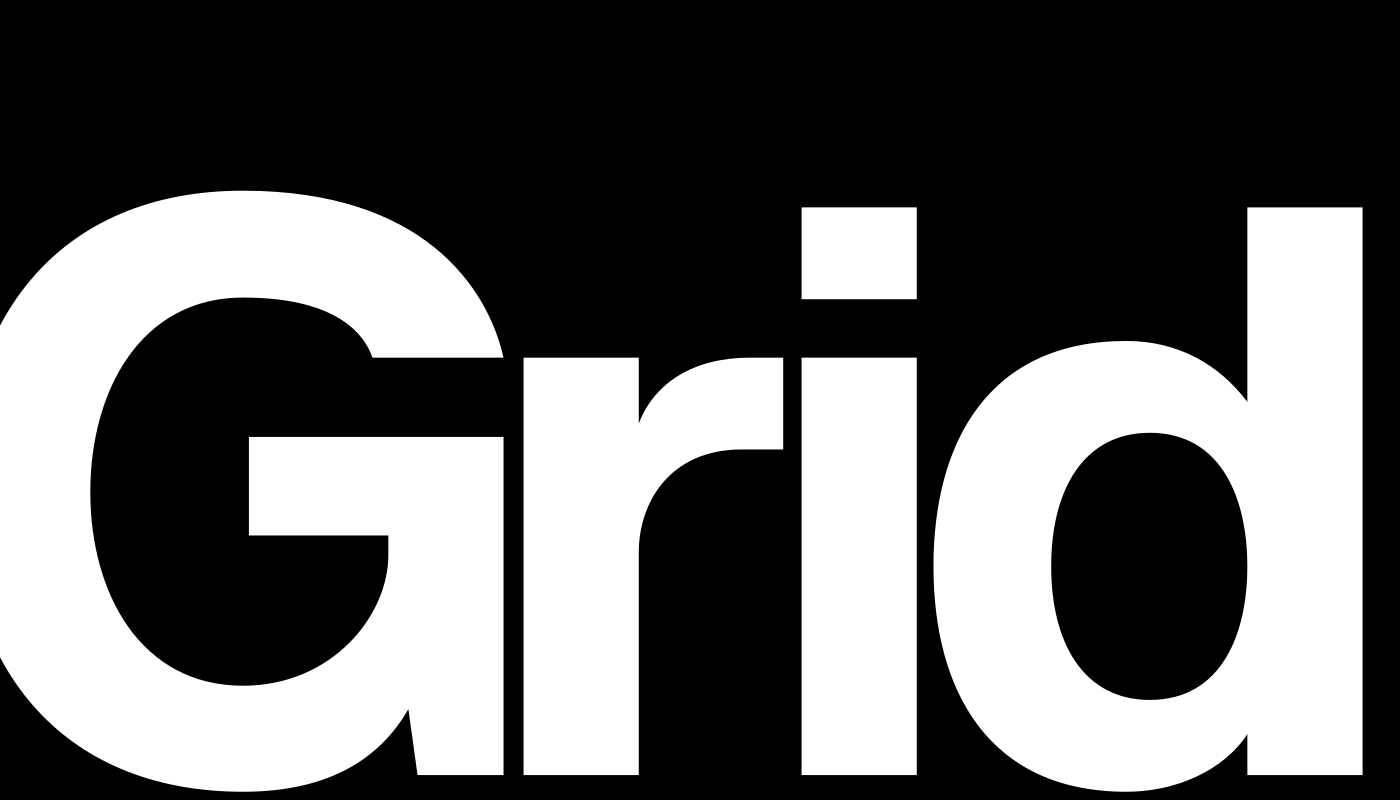
FAY Basis is a display focused workhorse neo-grotesque inspired by iconic design history. Developed for over five years as a personal loveletter to the international typographic design style and its following movements. FAY Basis is defined by a drive for idealism, trying to recreate the wonder of a young designer, while respecting typographic best practices.
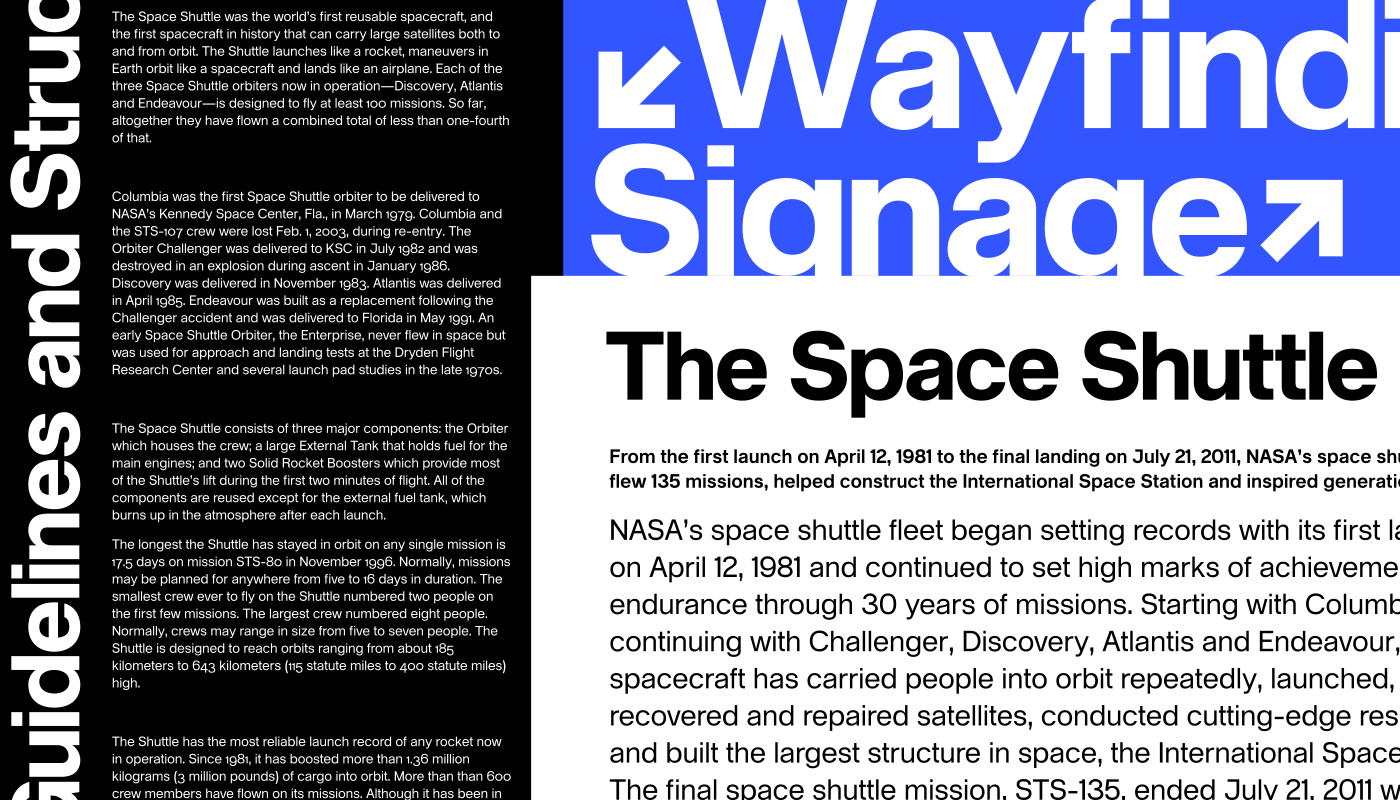
The typeface family contains multiple features for effective display use, such as multiple arrow types, optimized special characters, and more. FAY Basis currently comes in two variations. The FAY Basis Display style features tighter spacing and more promenant glyph designs for large scale use, while the FAY Basis Text style focuses on keeping the spirit of the typeface, while providing optimizations for usability at bodytext sizes.
Read more about the creation of FAY Basis
Type Tester
OpenType Features
Styles
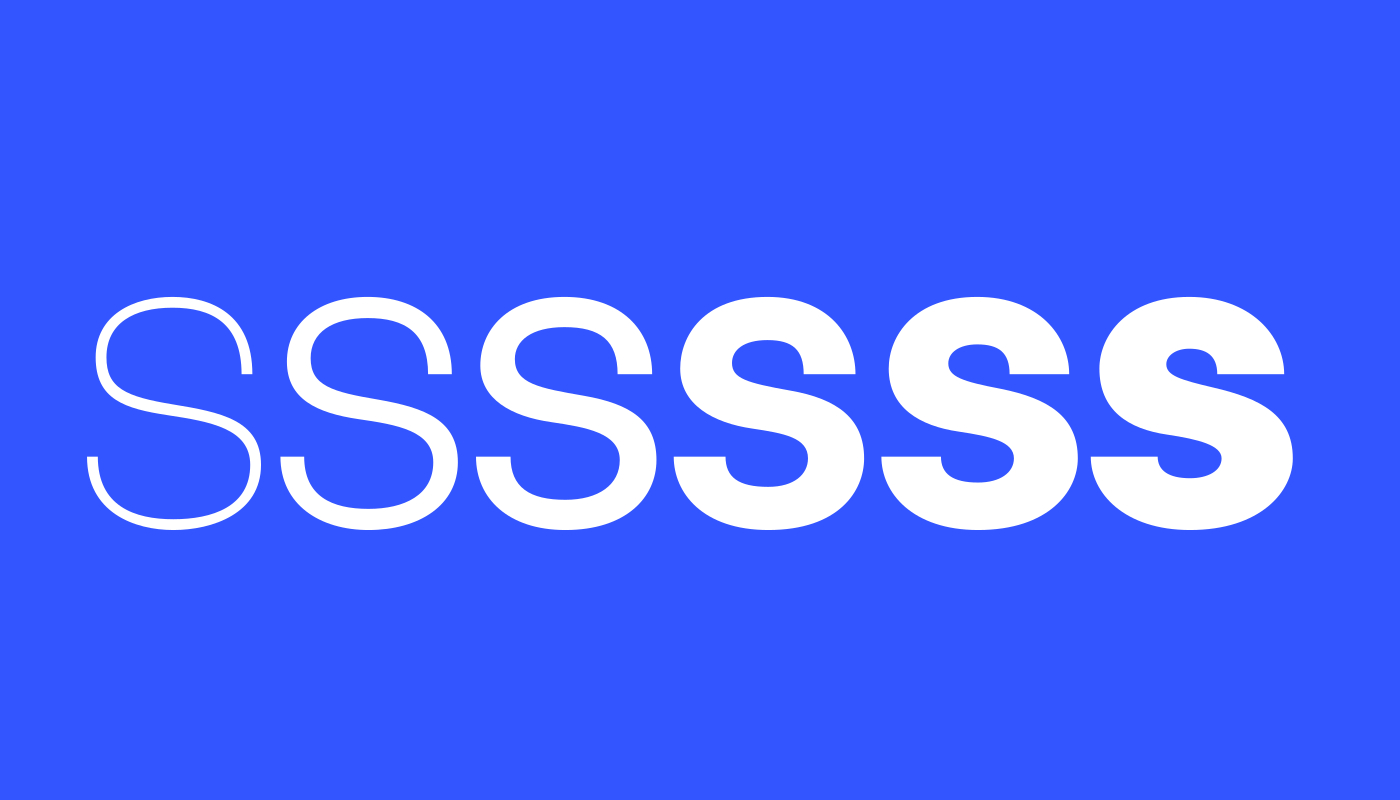
- Display Thin
- Display Light
- Display Regular
- Display Book
- Display Medium
- Display Bold
- Display Black
- Display Thin Oblique
- Display Light Oblique
- Display Regular Oblique
- Display Book Oblique
- Display Medium Oblique
- Display Bold Oblique
- Display Black Oblique
- Headline Thin
- Headline Light
- Headline Regular
- Headline Book
- Headline Medium
- Headline Bold
- Headline Black
- Headline Thin Oblique
- Headline Light Oblique
- Headline Regular Oblique
- Headline Book Oblique
- Headline Medium Oblique
- Headline Bold Oblique
- Headline Black Oblique
- Text Thin
- Text Light
- Text Regular
- Text Book
- Text Medium
- Text Bold
- Text Black
- Text Thin Oblique
- Text Light Oblique
- Text Regular Oblique
- Text Book Oblique
- Text Medium Oblique
- Text Bold Oblique
- Text Black Oblique
Type Specimen
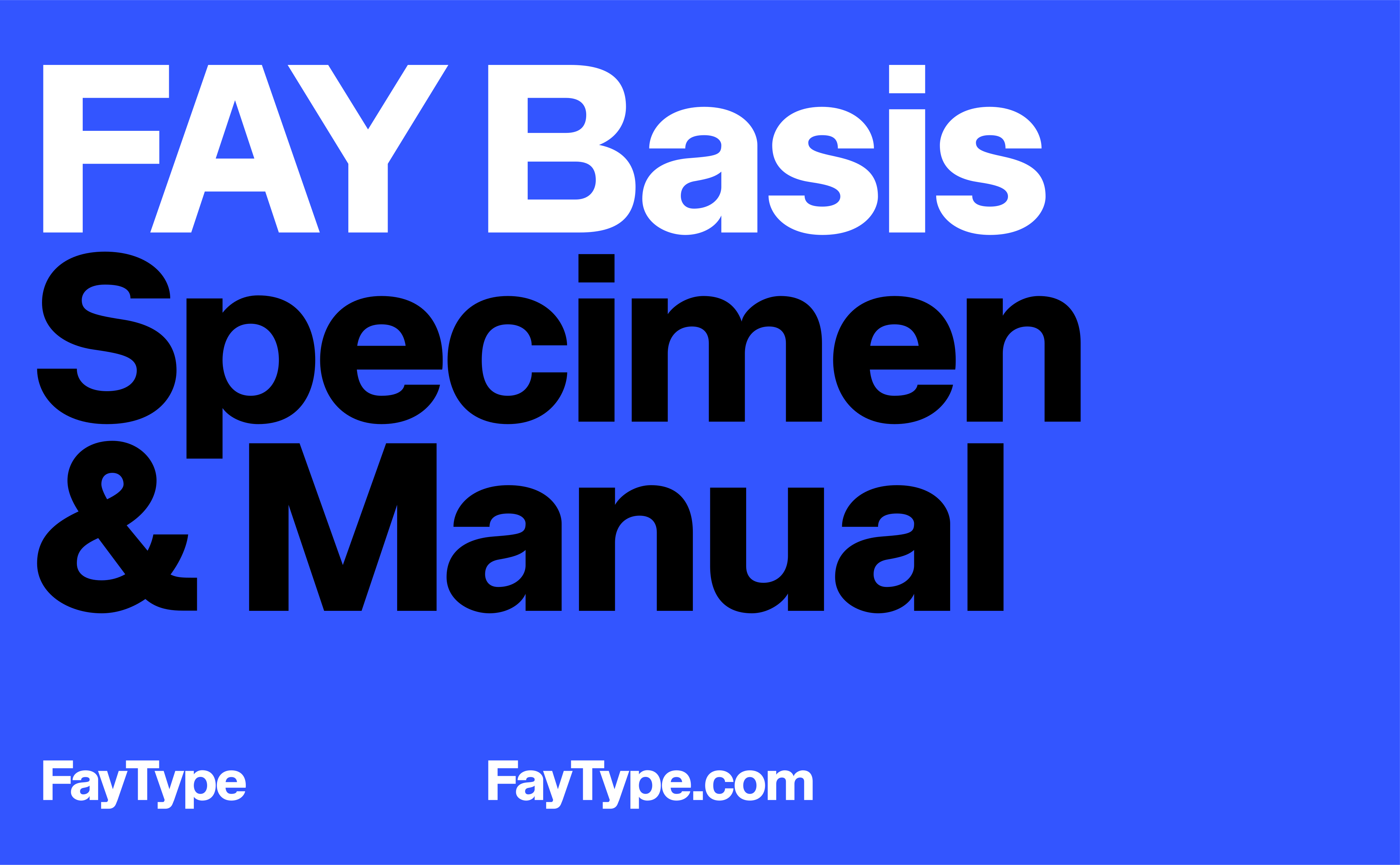
Take a look at the type specimen for FAY Basis. Included in the specimen are the following and more:
- Notes about the origin and spiriation behind the typeface
- Guide pages for the variable axis
- Specimen pages for all styles
- Specimen pages and guides for all features
- Overview over the glyphset and language support
Collection
FAY Basis Typeface Collection
Includes all 42 Styles of FAY Basis Display, Headline & FAY Basis Text
FAY Basis Display
14 Styles (7 Weights, 7 Oblique)
FAY Basis Headline
14 Styles (7 Weights, 7 Oblique)
FAY Basis Text
14 Styles (7 Weights, 7 Oblique)
+ FAY Basis Variable, the 3-Axis Variable Font Version of FAY Basis.
Features
Case-Sensitive Forms, Oldstyle Figures, Tabular Figures, Denominators, Numerators, Fractions, Arrow Symbols, Stylistic Sets
Go to the overview
Glyphs
Supported Languages
423
according to the Hyperglot Database by Rosetta Type and crossreferenced with the Underware Latin Plus Character Set.
Unless otherwise specified, we primarily support languages written in the Latin alphabet.
It's important to note that our definition of language support is based on character coverage, not necessarily on the accuracy of specific font variations. While we strive for comprehensive coverage, there may be instances where certain character styles are not fully represented. If you have questions about a particular language or character, please don't hesitate to contact us.
HideShow Languages
Abron, Abua, Acheron, Achinese, Acholi, Achuar-Shiwiar, Adamawa Fulfulde, Adangme, Afar, Afrikaans, Aguaruna, Ahtna, Akoose, Alekano, Aleut, Algonquin, Amahuaca, Amarakaeri, Amis, Anaang, Andaandi, Angas, Anufo, Anuta, Ao Naga, Apinayé, Arabela, Aragonese, Arbëreshë Albanian, Arvanitika Albanian, Asháninka, Ashéninka Perené, Asu (Tanzania), Atayal, Awa-Cuaiquer, Awing, Baatonum, Bafia, Bagirmi Fulfulde, Balinese, Balkan Romani, Bambara, Banjar, Baoulé, Bari, Basque, Bassari, Batak Dairi, Batak Karo, Batak Mandailing, Batak Simalungun, Batak Toba, Bemba (Zambia), Bena (Tanzania), Biali, Bikol, Bini, Bislama, Boko (Benin), Bomu, Bora, Borana-Arsi-Guji Oromo, Borgu Fulfulde, Bosnian, Breton, Buginese, Bushi, Candoshi-Shapra, Caquinte, Caribbean Hindustani, Cashibo-Cacataibo, Cashinahua, Catalan, Cebuano, Central Aymara, Central Kurdish, Central Nahuatl, Central-Eastern Niger Fulfulde, Cerma, Chachi, Chamorro, Chavacano, Chayahuita, Chiga, Chiltepec Chinantec, Chokwe, Chuukese, Cimbrian, Cofán, Congo Swahili, Cook Islands Māori, Cornish, Corsican, Creek, Crimean Tatar, Croatian, Czech, Danish, Dehu, Dendi (Benin), Dimli, Duala, Dutch, Dyan, Dyula, Eastern Arrernte, Eastern Maninkakan, Eastern Oromo, Efik, Embu, English, Ese Ejja, Esperanto, Fanti, Faroese, Fijian, Filipino, Finnish, French, Friulian, Ga, Gagauz, Galician, Ganda, Garifuna, Ga’anda, German, Gheg Albanian, Gilbertese, Gonja, Gooniyandi, Gourmanchéma, Guadeloupean Creole French, Gusii, Haitian, Hani, Hausa, Hawaiian, Hiligaynon, Ho-Chunk, Hopi, Huastec, Hungarian, Hän, Ibibio, Icelandic, Ido, Idoma, Igbo, Iloko, Inari Sami, Indonesian, Interglossa, Interlingua, Interlingue, Irish, Istro Romanian, Italian, Ixcatlán Mazatec, Jamaican Creole English, Javanese, Jenaama Bozo, Jola-Fonyi, K'iche', Kabuverdianu, Kaingang, Kako, Kala Lagaw Ya, Kalaallisut, Kalenjin, Kamba (Kenya), Kaonde, Kaqchikel, Karelian, Kashubian, Kekchí, Kenzi/Mattokki, Khasi, Kikuyu, Kimbundu, Kinyarwanda, Kirmanjki, Kituba (DRC), Klingon, Kom (Cameroon), Kongo, Konzo, Koyra Chiini Songhay, Koyraboro Senni Songhai, Krio, Kuanyama, Kven Finnish, Kwasio, Kölsch, Ladin, Ladino, Latgalian, Ligurian, Lingala, Lithuanian, Lojban, Lombard, Low German, Lower Sorbian, Lozi, Luba-Katanga, Luba-Lulua, Lule Sami, Luo (Kenya and Tanzania), Luxembourgish, Maasina Fulfulde, Macedo-Romanian, Makhuwa, Makhuwa-Meetto, Makonde, Makwe, Malagasy, Malaysian, Maltese, Mam, Mamara Senoufo, Mandinka, Mandjak, Manx, Maore Comorian, Maori, Mapudungun, Marshallese, Matsés, Mauritian Creole, Mende (Sierra Leone), Meriam Mir, Meru, Meta’, Metlatónoc Mixtec, Mi'kmaq, Minangkabau, Mirandese, Moba, Mohawk, Montenegrin, Munsee, Murrinh-Patha, Murui Huitoto, Muslim Tat, Mwani, Ménik, Mískito, Naga Pidgin, Ndonga, Neapolitan, Ngazidja Comorian, Nigerian Fulfulde, Niuean, Nobiin, Nomatsiguenga, Noon, North Azerbaijani, North Marquesan, North Ndebele, Northern Kissi, Northern Kurdish, Northern Qiandong Miao, Northern Uzbek, Northwestern Ojibwa, Norwegian, Novial, Nyamwezi, Nyanja, Nyankole, Nyemba, Nzima, Occitan, Ojitlán Chinantec, Orma, Oroqen, Otuho, Palauan, Paluan, Pampanga, Papantla Totonac, Papiamento, Paraguayan Guaraní, Pedi, Picard, Pichis Ashéninka, Piemontese, Pijin, Pintupi-Luritja, Pipil, Pohnpeian, Polish, Portuguese, Potawatomi, Pulaar, Purepecha, Páez, Quechua, Romanian, Romansh, Rotokas, Rundi, Rwa, Saafi-Saafi, Samburu, Samoan, Sango, Sangu (Tanzania), Saramaccan, Sardinian, Scots, Scottish Gaelic, Sena, Seri, Seselwa Creole French, Shambala, Sharanahua, Shawnee, Shilluk, Shipibo-Conibo, Shona, Shuar, Sicilian, Silesian, Slovak, Slovenian, Soga, Somali, Soninke, South Azerbaijani, South Marquesan, South Ndebele, Southern Aymara, Southern Bobo Madaré, Southern Dagaare, Southern Qiandong Miao, Southern Sami, Southern Sotho, Spanish, Sranan Tongo, Standard Estonian, Standard Latvian, Standard Malay, Sundanese, Susu, Swahili, Swati, Swedish, Swiss German, Syenara Senoufo, Tagalog, Tahitian, Taita, Talysh, Tasawaq, Tedim Chin, Tetum, Tetun Dili, Timne, Tiv, Tiéyaxo Bozo, Toba, Tok Pisin, Tokelau, Toki Pona, Tonga (Tonga Islands), Tonga (Zambia), Tosk Albanian, Tsakhur, Tsonga, Tswana, Tumbuka, Turkish, Turkmen, Tuvalu, Twi, Tzeltal, Tzotzil, Uab Meto, Umbundu, Upper Guinea Crioulo, Upper Sorbian, Venetian, Veps, Vlax Romani, Volapük, Võro, Waama, Wallisian, Walloon, Walser, Wamey, Wangaaybuwan-Ngiyambaa, Waorani, Waray (Philippines), Warlpiri, Wasa, Wayuu, Welsh, West Central Oromo, West-Central Limba, Western Abnaki, Western Frisian, Western Niger Fulfulde, Wik-Mungkan, Wiradjuri, Wolof, Xavánte, Xhosa, Yagua, Yanesha', Yangben, Yanomamö, Yao, Yapese, Yindjibarndi, Yoruba, Yucateco, Zapotec, Zarma, Zulu, Zuni, Záparo
OpenType Features
Stylistic Sets
Circled Arrows
ss01
This feature replaces unicode arrows with circled arrows. The circled arrows are as tall as a regular uppercase glyph. Inspired by the NYC Subway signage.
←Subway
Squared Arrows
ss02
This feature replaces unicode arrows with squared arrows. The squared arrows are as tall as a regular uppercase glyph. Inspired by the NYC Subway signage.
Entry↗
Serifless J
ss03
This feature replaces the uppercase J with a version without the serif at the top.
Justified
Number Features
Denominator
dnom
This feature replaces number figures with their denominator forms.
F1234567890
Numerator
numr
This feature replaces number figures with their numerator forms.
F1234567890
Superscript
sups
This feature replaces numbers with smaller Superscript figures, which slightly ascend above the cap height. Subscript are sometimes also referred to as superior numbers.
Source[3]
Subscript
subs
This feature replaces numbers with smaller Subscript figures, which slightly drop below the baseline. Subscript are sometimes also referred to as (scientific) inferior numbers. As the name suggests, often used for scientific notation.
C6H12O6
Tabular Figures
tnum
This feature replaces selected numbers with tabular figures, which have uniform widths. Ideal for tables and data-heavy text, such as financial reports.
F1234567890
Oldstyle Figures
onum
This feature replaces selected numbers with oldstyle figures that enhance the reading flow by adding a size variation rhythm. Ideal for flowing text.
F1234567890
Oldstyle Tabular Figures
tosf
This feature replaces selected numbers with tabular oldstyle figures that keep the positives of normal oldstyle figures as well as giving each number a uniform width, which helps with vertical alignment.
F1234567890
Fractions
frac
This feature enables the automatic use of denominators and numerators when writing fractions. Numbers directly surrounding a slash get replaced by diagonal fractions. The rhythm the smaller glyphs create aid visual clarity.
1 2/3 + 4 6/12
Misc Features
Discretionary Ligatures
dlig
Opposed to Standard Ligatures, Discretionary Ligatures are more decorative in nature. For FAY Basis, there are ligatures for creating arrows. The feature has 3 different arrow lengths, which can be accessed by using a different amount of hyphens when creating the arrow ligatures.
<- Left & Right --->
Ordninals
ordn
This feature replaces certain default lowercase glyphs with their ordinal forms.
1st, 2nd, 3rd
Case Sensitive Forms
case
This feature allows for precise control over letter casing within your text. By enabling case-sensitive styling, you can apply specific typographic treatments to uppercase, lowercase, and title case letters. This is invaluable for creating unique visual effects, such as emphasizing certain words, achieving a distinctive aesthetic, or adhering to specific branding guidelines. With case-sensitive styling, you have the power to fine-tune the visual hierarchy and personality of your text.
(05/02/2016)↗
Glyph Map
Uppercase
Lowercase
Numbers
Uppercase Extended
Lowercase Extended
Symbols
Arrows
Currency Symbols
FAY Basis In Use

What's next?
FAY Basis will be available soon.